Drywall Repair in Boston, MA
Holes, cracks, and water damage patched and texture-matched, on drywall and on old plaster-and-lath walls.
- Licensed & Insured
- Same-Day Available
- Satisfaction Guaranteed
Why You Need It
Holes and cracks do not fix themselves, and they get worse. A small nail hole is easy. A doorknob hole, a water stain, or a crack that keeps coming back in an old plaster wall is where people get stuck — usually because whoever patched it last treated a plaster wall like it was drywall. In Boston that mistake is common, because a lot of homes built before 1950 are plaster over wood lath, not drywall, and they crack in their own way. A picture-hanging hole that turns into a fist-sized hole after somebody tries to "widen it a little" to see what's back there is more common than you'd think, too.
What It Includes
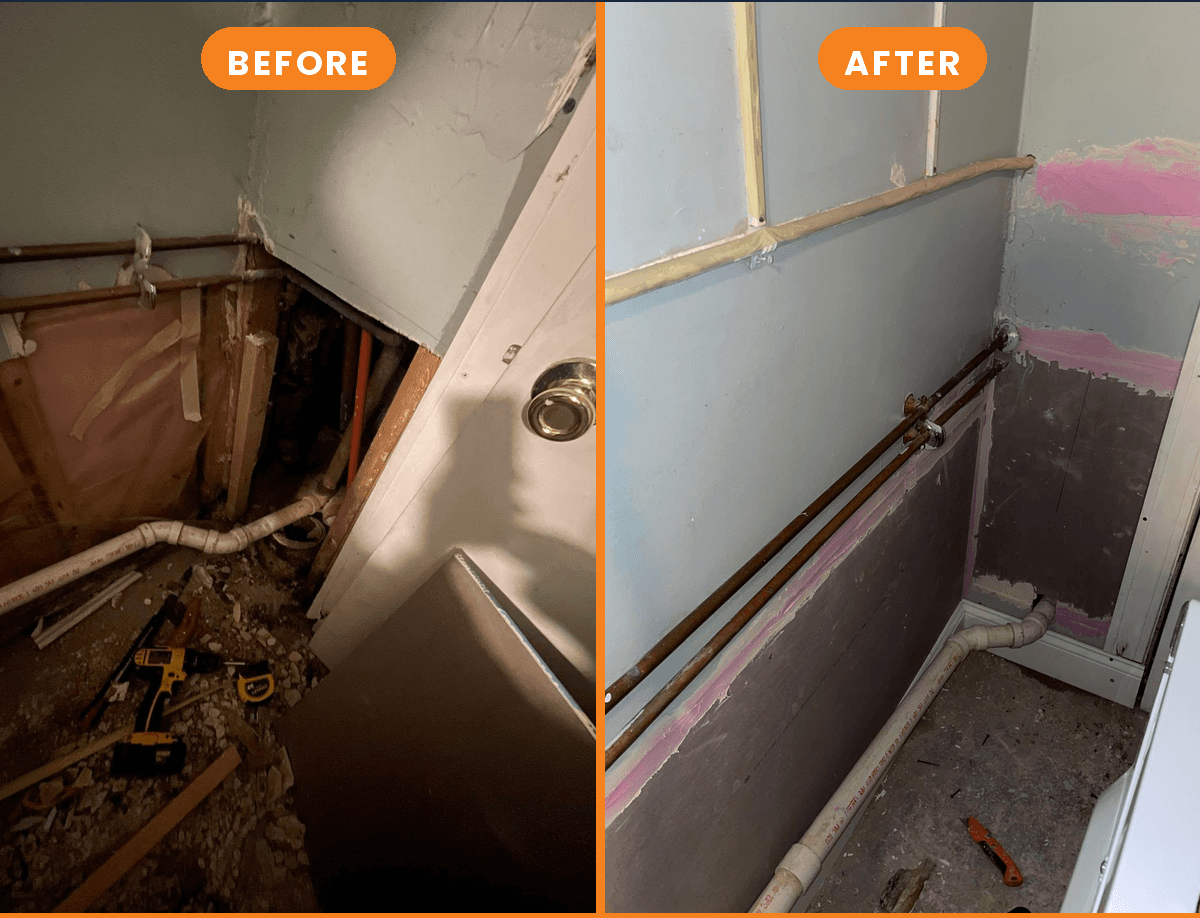
We cut out the bad section, patch it, tape and mud the seams, then sand and texture-match so the repair blends into the wall. On plaster-and-lath we anchor it the right way so it does not crack again by winter. On homes built before 1978, we take extra care when the work disturbs old painted surfaces — see our FAQ below on what that means. If the patch needs paint after, we can paint it too so the spot disappears.
What's Included
- Nail holes, dents, and small punctures
- Water-damage patches
- Cracks in drywall and in plaster-and-lath walls
- Texture matching so the patch blends into the wall
- Paint touch-up available as a follow-on service
How Long It Takes
Most small repairs are a single visit, a couple hours. A bigger water-damage patch or several spots around the house is usually still one day.
We show up when we say we will, put down cover so your floors stay clean, and haul the mess out with us. Owner-operated, licensed, insured, and backed by our satisfaction guarantee. This is part of our full drywall contractor service across Boston and the North Shore.
Drywall Repair FAQs
Is my wall drywall or plaster?
A lot of Boston homes built before 1950 have plaster over wood lath instead of drywall. Plaster cracks differently and needs different anchoring, so we check which one we're dealing with before we patch it.
Will the patch be visible after it's painted?
We texture-match the patch to the surrounding wall before it's primed, so it blends in rather than standing out as an obvious repair.
Can you fix a crack that keeps coming back?
Recurring cracks are common on plaster-and-lath walls that were patched like drywall in the past. We anchor the repair properly so it holds instead of reopening.
What does a repair like this cost?
Repairs are billed at our standard $100/hour rate with a one-hour minimum, and there's no trip fee anywhere in our service area. A single nail hole or dent is usually well under the hour; a water-damage patch or several spots around the house takes longer, and we'll give you an honest read on time once we've seen it.
Is this going to be messy, especially in an older home?
Cutting into plaster or drywall always makes some dust, and if your home was built before 1978 there's a real chance the paint underneath contains lead. We take care to contain the mess and work carefully on older painted surfaces. The EPA's lead-safe renovation guidance explains what's involved if you want the full picture before we start. See the EPA's RRP program page.
Should I just patch it myself?
A small nail hole, sure. Once you're into a doorknob-sized hole or a plaster crack, the surface prep is where DIY patches go wrong — plaster needs to be anchored into the lath, not just skimmed over, or it opens right back up. If you've already started and hit a wall, we finish jobs other people began, too.